
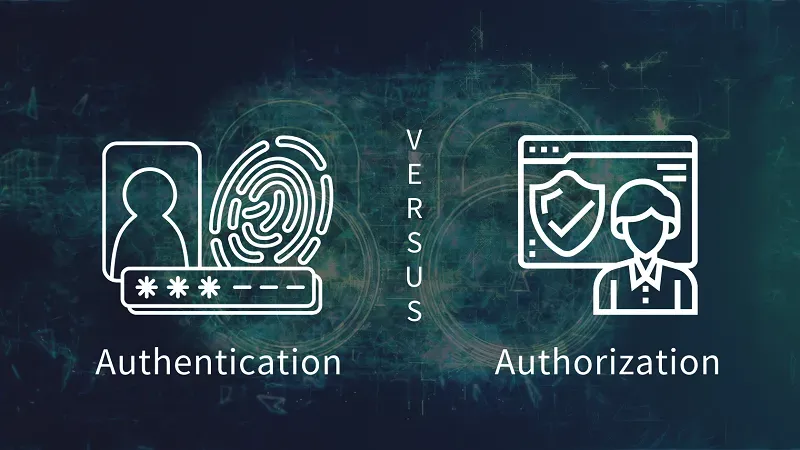
Security is one of the most critical responsibilities of back end development. Every application that handles user data must ensure that only legitimate users can access the system and that they can perform only the actions they are permitted to do. This is where authentication and authorization play a vital role. Although these terms are often used together, they serve different purposes in back end applications.
Understanding the difference between authentication and authorization is essential for building secure and reliable systems.
Table of Contents
What Is Authentication
Authentication is the process of verifying the identity of a user or system. It answers the question, who are you. Common methods include usernames and passwords, one time passwords, and biometric verification.
In back end systems, it is handled by validating credentials against stored records, usually in a database. Passwords are not stored in plain text but are hashed using secure algorithms.
According to OWASP’s best practices, weak mechanisms are among the most common causes of security breaches.
What Is Authorization
Authorization determines what an authenticated user is allowed to do. It answers the question, what can you access. Authorization rules define which resources and actions are permitted for different users.
Role based access control is a common authorization approach, where permissions are assigned based on user roles such as admin, editor, or viewer.
Microsoft’s guide on authorization explains how access control policies help protect application resources.
Difference
Authentication always comes before authorization. A user must first prove their identity before the system checks their permissions. Without it, authorization cannot be applied.
For example, logging into an application is authentication, while accessing an admin dashboard is authorization. Both processes work together to ensure system security.
Session Based Authentication
Session based authentication is a traditional approach used in many web applications. After a user logs in successfully, the server creates a session and stores session data on the server. A session identifier is sent to the client and included in subsequent requests.
While session based is secure and widely used, it may face scalability challenges in distributed systems.
Token Based Authentication and JWT
Token based authentication has become popular in modern applications, especially APIs. Instead of storing session data on the server, the server issues a token that the client sends with each request.
JSON Web Tokens are commonly used for this purpose. JWTs contain encoded information about the user and can be verified without server side storage.
OAuth and Third Party Systems
OAuth is an authorization framework that allows users to grant applications limited access to their data without sharing passwords. It is commonly used for login via Google, Facebook, or GitHub.
OAuth improves user experience and security by delegating it to trusted providers.
OAuth 2.0 official documentation explains how this framework enables secure delegated access.
Securing Systems
Strong authentication systems require secure password policies, and protection against brute force attacks. Rate limiting and account lockout mechanisms help prevent unauthorized access.
Regular security audits and updates are essential to protect systems from evolving threats.
Authorization Best Practices
Authorization should follow the principle of least privilege, granting users only the permissions they need. Access checks should be enforced on the server side rather than relying on client side controls.
Using centralized authorization logic makes systems easier to manage and reduces the risk of security gaps.
Real World Use Cases
In enterprise applications, authentication and authorization control access to sensitive business data. In e commerce platforms, they protect user accounts and payment information. In content management systems, they define who can publish or edit content.
Without proper authentication and authorization, applications are vulnerable to data leaks and misuse.
Conclusion
Authentication and authorization are fundamental to back end security. Together, they protect applications from unauthorized use and data breaches.
By implementing secure methods, using token based systems like JWT, and enforcing strong authorization policies, back end developers can build robust and trustworthy applications. As security threats continue to grow, mastering these concepts remains essential for modern back end development.
Also Check APIs and RESTful Services – Comprehensive Guide – 2026
1 thought on “Backend Authentication & Authorization – Ultimate Guide 2026”