
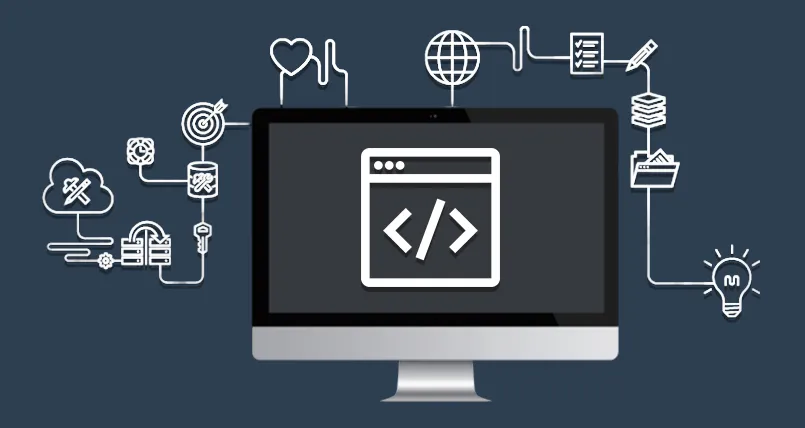
Back end development is the backbone of modern web and mobile applications. While users interact with buttons, forms, and interfaces on the front end, the real processing happens behind the scenes on the server side. Back end development focuses on building and maintaining the logic, databases, APIs, and servers that make applications functional, secure, and scalable.
Without a strong back end, even the most visually appealing application cannot perform meaningful tasks such as user authentication, data storage, or business logic execution.
What Is Back End Development
Back end development refers to the server side of an application where data is processed, stored, and managed. It includes server logic, databases, APIs, and application architecture. Back end developers ensure that requests sent from the front end are handled correctly and responses are returned efficiently.
According to
MDN Web Docs’ explanation of server side programming, the back end is responsible for handling data, user authentication, and communication between different systems.
Core Components of Back End Systems
A typical back end system consists of three main components: the server, the application logic, and the database. The server receives requests from users, the application logic processes those requests, and the database stores and retrieves data.
Servers are hosted on physical machines or cloud platforms and run software such as Apache, Nginx, or cloud managed services. The application layer is written using programming languages and frameworks, while databases store structured or unstructured data required by the application.
Role of Databases in Back End Development
Databases play a crucial role in back end development. They store user information, application data, logs, and transactional records. Back end developers interact with databases using queries and ORM tools to ensure data integrity and performance.
Both relational and non relational databases are commonly used depending on application needs.
IBM’s overview of databases explains how databases support data driven applications by enabling efficient storage and retrieval.
APIs and Communication
Back end systems communicate with front end applications through APIs. An API acts as a bridge that allows different systems to exchange data securely. Most modern back ends use RESTful APIs that rely on HTTP methods such as GET, POST, PUT, and DELETE.
APIs enable separation of concerns, allowing front end and back end teams to work independently.
REST API concepts explained by Red Hat highlight how APIs make applications modular and scalable.
Authentication and Security
Security is a core responsibility of back end development. Back end systems manage authentication, authorization, and data protection. This includes validating user credentials, managing sessions or tokens, and enforcing access control rules.
Common security mechanisms include password hashing, JSON Web Tokens, and role based access control.
OWASP’s secure authentication guidelines emphasize the importance of protecting back end systems from common vulnerabilities.
Performance and Scalability
Back end developers must ensure that systems can handle increasing numbers of users and requests. Performance optimization includes efficient database queries, caching, and minimizing server response times.
Scalability allows applications to grow by adding more resources or distributing workloads across multiple servers.
Amazon Web Services’ scalability principles explain how modern back end systems are designed to handle high traffic and large datasets.
Back End Development in Real World Applications
In real world applications, back end development powers features such as user accounts, payment processing, notifications, and analytics. Social media platforms rely on back end systems to manage millions of users and interactions in real time.
E commerce platforms depend on back ends to handle inventory, orders, and secure payments. Without efficient server side systems, these applications would not function reliably.
Skills Required for Back End Developers
Back end developers need strong knowledge of programming languages, databases, APIs, and system architecture. Problem solving skills, security awareness, and understanding of scalability are equally important.
Continuous learning is essential, as back end technologies evolve rapidly with cloud computing and microservices architectures.
Conclusion
Back end development is the foundation that supports modern digital applications. It handles data processing, security, communication, and scalability, ensuring that applications work smoothly and reliably.
Understanding how server side systems operate helps developers build efficient, secure, and scalable solutions. As applications continue to grow in complexity, the role of back end development becomes increasingly critical in delivering high quality digital experiences.
Also Check Database Security – Protecting Data from Attacks – 2026
1 thought on “Back End Development – Comprehensive Guide – 2026”